Sodium-Ion Battery Storage: The Emerging Alternative to Lithium for Grid Applications
Templates035 introduces our first sodium-ion battery energy storage system (Na-ion BESS), targeting grid-scale applications where cost-effectiveness and supply chain independence are prioritized over energy density. This article examines the technology, performance, and market positioning of sodium-ion versus lithium-ion for stationary storage.
Na-Ion vs LFP Comparison
| Parameter | Na-Ion (Templates035) | LFP (Templates035) |
| Energy Density | 140 Wh/kg (cell) | 170 Wh/kg (cell) |
| Cycle Life | 4,000+ @ 90% DOD | 6,000+ @ 90% DOD |
| Temperature Range | -30°C to +60°C | -20°C to +55°C |
| Discharge to 0V | Yes (safe transport) | No (minimum 20% SOC) |
| Raw Material Cost | 30-40% lower | Baseline |
| Supply Chain | No lithium/cobalt needed | Lithium dependent |
Advantages for Grid Storage
- Extreme temperature: Operates -30°C to +60°C without heating/cooling, reducing BOS costs by 15%
- Safe transport: Can be discharged to 0V and shipped as non-hazardous goods (UN38.3 exempt)
- Material abundance: Sodium, iron, manganese — no geopolitical supply risk
- Cost trajectory: Expected to reach $50/kWh cell cost by 2028 (vs. $65/kWh for LFP)
Target Applications
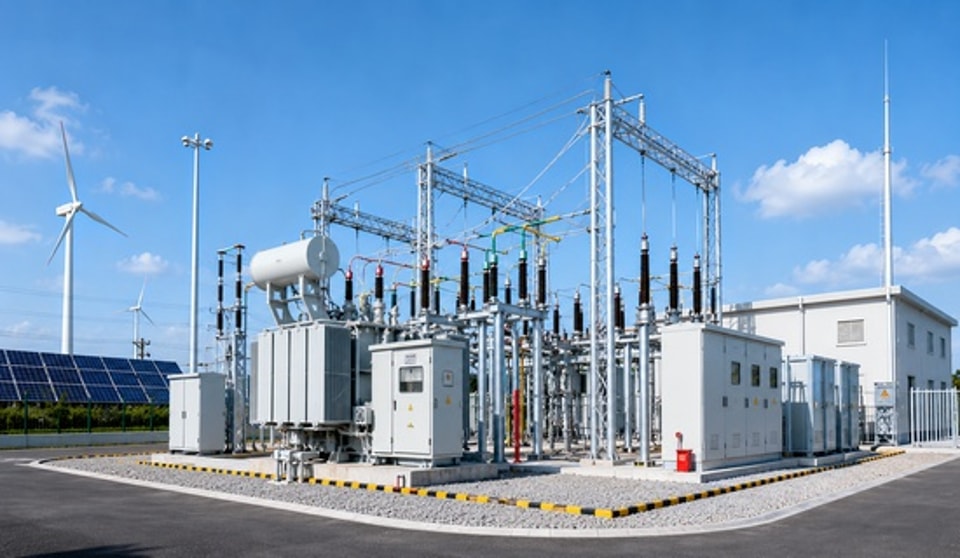
Na-ion BESS is ideally suited for grid-scale peak shaving (2-4 hour duration), frequency regulation, and renewable energy time-shifting in regions with extreme temperature ranges. For long-duration storage (>4 hours) and space-constrained applications, LFP remains the preferred choice due to higher energy density and longer cycle life.
Our Address



Product Gallery