
Templates035 Completes 500MW Solar-Plus-Storage Project in Middle East
Templates035 announces the successful completion and grid connection of a landmark 500MW solar photovoltaic plant paired with a 250MWh battery energy storage system in the United Arab Emirates, representing one of the largest solar-plus-storage installations in the MENA region.Project Specifications500MW DC / 400MW AC solar PV using 714,000 TOPCon bifacial modules on single-axis trackers250MWh / 125MW LFP battery energy storage system in 50× containerized BESS unitsAnnual energy production: 1,050 GWh (enough to power 120,000 households)Levelized Cost of Energy (LCOE): $0.0179/kWh — record-low for the regionTechnical AchievementsBifacial energy gain of 18% from high-albedo desert sand surfaceBESS providing 4 hours of evening peak shifting, extending solar generation to 10 PMGrid-forming PCS enabling synthetic inertia and frequency regulation servicesRemote O&M via satellite-connected SCADA with drone-based thermal inspection"This project demonstrates that solar-plus-storage can deliver firm, dispatchable renewable energy at costs below conventional fossil fuel generation. Templates035 is proud to support the UAE's Net Zero 2050 strategic initiative." - VP Projects, Templates035
Next-Generation TOPCon Solar Cells Break 26% Efficiency Barrier
Templates035 R&D division announces that our next-generation TOPCon solar cells have achieved a certified conversion efficiency of 26.2% on full-size commercial wafers (182mm M10), verified by Fraunhofer ISE CalLab, surpassing the previous industry record and approaching the theoretical single-junction silicon limit.Technology BreakthroughCertified efficiency: 26.2% on 182mm M10 wafer (Fraunhofer ISE CalLab verified)Key innovation: Poly-Si/SiOx passivated contact with ultra-thin (Metallization: LECO (Laser-Enhanced Contact Opening) with fine-line silver paste (Passivation: Al2O3/SiNx rear surface with field-effect passivation achieving J0 Path to Mass ProductionPilot line producing 10,000 cells/day at 25.8% average efficiencyFull production line (GW-scale) conversion scheduled for H2 2026Expected module-level efficiency: 23.5-24.0% (700W+ panel rating)Manufacturing cost premium: Industry SignificanceThis achievement narrows the gap to heterojunction (HJT) and perovskite-silicon tandem technologies while maintaining TOPCon's significant manufacturing cost advantage and compatibility with existing PERC production equipment through retrofit upgrades.

Templates035 Signs 2GW Wind Turbine Supply Agreement with European Developer
Templates035 announces the signing of a multi-year 2GW frame agreement with a leading European renewable energy developer for the supply of onshore wind turbines across projects in Scandinavia, Iberia, and Central Europe from 2026 to 2030.Agreement Scope2GW total capacity across 12-15 wind farm projects over 4 years6.X MW platform with 162m and 170m rotor configurationsFull-scope supply: turbines, towers, transportation, installation supervision25-year service agreements with guaranteed availability above 97%Localization CommitmentBlade manufacturing at new 120,000m² factory in Portugal (operational Q3 2026)Tower fabrication partnerships with local steelworks in each target marketRegional service hubs in Stockholm, Madrid, and Warsaw with 48-hour response SLATarget: 65% local content by value across the frame agreementEconomic ImpactThe agreement is valued at approximately €2.8 billion over its lifetime and is expected to create 1,200 direct manufacturing jobs and 800 service positions across Europe. First turbine deliveries are scheduled for Q2 2027.
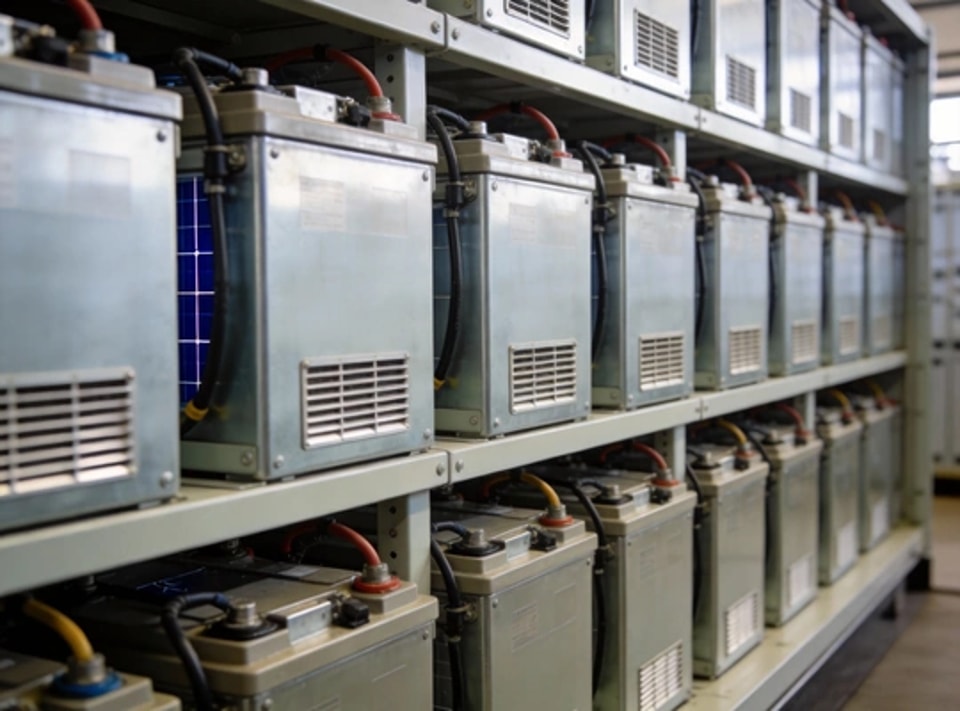
Sodium-Ion Battery Storage: The Emerging Alternative to Lithium for Grid Applications
Templates035 introduces our first sodium-ion battery energy storage system (Na-ion BESS), targeting grid-scale applications where cost-effectiveness and supply chain independence are prioritized over energy density. This article examines the technology, performance, and market positioning of sodium-ion versus lithium-ion for stationary storage.Na-Ion vs LFP ComparisonParameterNa-Ion (Templates035)LFP (Templates035)Energy Density140 Wh/kg (cell)170 Wh/kg (cell)Cycle Life4,000+ @ 90% DOD6,000+ @ 90% DODTemperature Range-30°C to +60°C-20°C to +55°CDischarge to 0VYes (safe transport)No (minimum 20% SOC)Raw Material Cost30-40% lowerBaselineSupply ChainNo lithium/cobalt neededLithium dependentAdvantages for Grid StorageExtreme temperature: Operates -30°C to +60°C without heating/cooling, reducing BOS costs by 15%Safe transport: Can be discharged to 0V and shipped as non-hazardous goods (UN38.3 exempt)Material abundance: Sodium, iron, manganese — no geopolitical supply riskCost trajectory: Expected to reach $50/kWh cell cost by 2028 (vs. $65/kWh for LFP)Target ApplicationsNa-ion BESS is ideally suited for grid-scale peak shaving (2-4 hour duration), frequency regulation, and renewable energy time-shifting in regions with extreme temperature ranges. For long-duration storage (>4 hours) and space-constrained applications, LFP remains the preferred choice due to higher energy density and longer cycle life.

Solar PV System Design Guide: String Sizing, Tilt Optimization & Energy Yield Simulation
Proper PV system design is critical for maximizing energy yield, ensuring equipment longevity, and meeting financial return targets. This technical guide covers the key design considerations for utility-scale and commercial solar installations.String Sizing FundamentalsMaximum string voltage: Calculate Voc at minimum site temperature using temperature coefficient (e.g., -0.27%/°C for TOPCon). Must not exceed inverter maximum DC input voltage (typically 1500V).Minimum string voltage: Calculate Vmpp at maximum site temperature. Must remain above inverter MPPT lower limit for full power harvest.Formula: Voc(Tmin) = Voc(STC) × [1 + TkVoc × (Tmin - 25)], where TkVoc is temperature coefficient of VocString length: Typically 26-32 modules per string for 1500V system with 700W bifacial modulesTilt Angle OptimizationLatitudeFixed Tilt (Optimal)Single-Axis Tracker Gain0-15° (Equatorial)10-15°+15-20%15-30° (Subtropical)20-25°+20-28%30-45° (Temperate)25-35°+25-35%45-60° (Northern)35-50°+15-25%Energy Yield SimulationSoftware tools: PVsyst (industry standard), SAM (NREL, free), Helioscope (cloud-based rapid design)Weather data: Use TMY (Typical Meteorological Year) from Meteonorm, SolarGIS, or NASA POWERLoss factors to model: soiling (2-5%), mismatch (1-2%), wiring (1.5%), inverter clipping (0-3%), degradation (0.4%/yr for TOPCon), transformer losses (1%), availability (1-2%)Bifacial modeling: Use view factor model or ray-tracing; ground albedo typically 0.20-0.25 (grass), 0.30-0.40 (sand/concrete)DC/AC Ratio SelectionTypical range: 1.20-1.40 for fixed-tilt, 1.15-1.30 for single-axis trackerHigher DC/AC ratio increases morning/evening energy capture but adds clipping losses at middayOptimal ratio depends on module cost, inverter cost, and PPA/tariff structureFor time-of-use tariffs valuing evening energy: pair with west-facing bifacial or storage
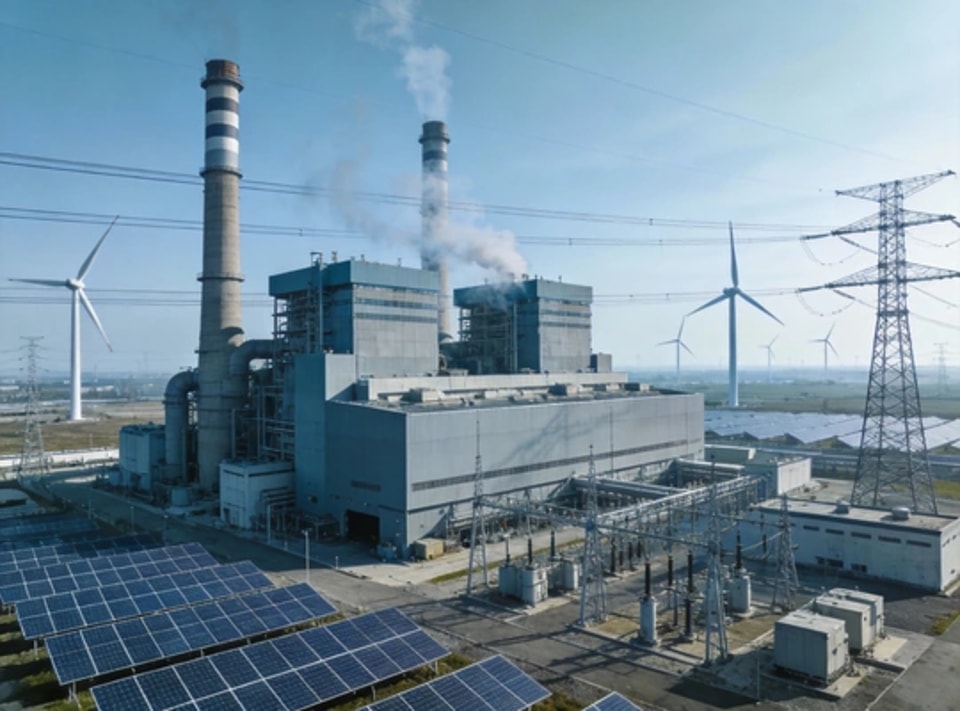
Global Energy Transition 2026: Investment Trends, Policy Drivers & Market Outlook
Global clean energy investment surpassed $2 trillion in 2025 for the first time, outpacing fossil fuel investment by 2:1. This analysis examines the key investment trends, policy drivers, and market outlook shaping the energy transition in 2026 and beyond.Investment Highlights1. Solar DominanceSolar PV investment reached $450B in 2025, 380GW installed (new annual record)Module prices stabilized at $0.10-0.12/W after 2024 oversupply correctionUtility-scale solar LCOE: $0.02-0.04/kWh in optimal locations — cheapest electricity source ever2. Battery Storage BoomGrid-scale storage deployment: 120GWh in 2025 (3× versus 2023)LFP cell prices reached $55/kWh, system-level LCOS approaching $0.05/kWh for 4-hourSolar-plus-storage becoming default configuration for new utility PV projects3. Offshore Wind Acceleration30GW of offshore wind under construction globally across 15 countriesFloating offshore wind moving from pilot to commercial scale (>100MW projects)Turbine sizes reaching 16-18MW for fixed-bottom and 15MW for floating platformsPolicy DriversRegionKey PolicyTargetUSAIRA clean energy tax credits80% clean power by 2030EUREPowerEU + Net Zero Industry Act42.5% RE share by 2030China14th Five-Year Plan + dual carbon1,200GW wind+solar by 2030India500GW non-fossil by 203050% RE capacity by 20302026 OutlookAnalysts project 420-450GW of solar, 130GW of wind, and 180GWh of storage deployment in 2026. Key risks include grid interconnection bottlenecks, permitting delays, and trade policy uncertainty around solar module tariffs. Opportunities lie in emerging markets, repowering aging wind farms, and long-duration energy storage commercialization.
Battery Energy Storage Sizing Guide: C-Rate, Duration & Grid Service Requirements
Properly sizing a battery energy storage system (BESS) requires balancing technical requirements, grid service obligations, and financial optimization. This guide helps energy developers and system integrators select the right capacity, power, and duration for their specific application.Key Sizing ParametersEnergy capacity (MWh): Total stored energy — determines duration at rated powerPower rating (MW): Maximum charge/discharge rate — determines instantaneous grid service capabilityDuration (hours): Energy ÷ Power — typically 1-4 hours for grid-scale, 4-8+ for long-durationC-rate: Power/Energy ratio — 0.25C = 4-hour duration, 0.5C = 2-hour, 1C = 1-hourApplication-Based SizingApplicationDurationC-RateCycles/YearChemistryFrequency regulation0.5-1 hr1-2C3,000-5,000LFP / Na-ionPeak shaving2-4 hr0.25-0.5C300-500LFPSolar time-shift2-4 hr0.25-0.5C350-450LFPCapacity firming4-6 hr0.17-0.25C250-365LFPBackup / resilience4-8 hr0.125-0.25C50-100LFPLong-duration8-100 hr50-200Iron-air / flowDegradation & OverbuildLFP degrades approximately 2-3% per year at 1 cycle/day — plan for 20% capacity overbuild to meet end-of-life (EOL) contractual requirementsAugmentation strategy: install additional battery racks at years 8-10 to restore capacityWarranty typically guarantees 80% SOH at 15 years for LFP at specified cycling regimeFinancial OptimizationRevenue stacking: Combine multiple grid services (frequency regulation + peak shaving + capacity) to maximize returnsLCOS calculation: Include CAPEX, O&M, augmentation, degradation, and residual valueTypical LCOS: $0.05-0.08/kWh for 4-hour LFP system at current pricingIRR targets: 8-12% unlevered for merchant storage, 6-8% for contracted capacity
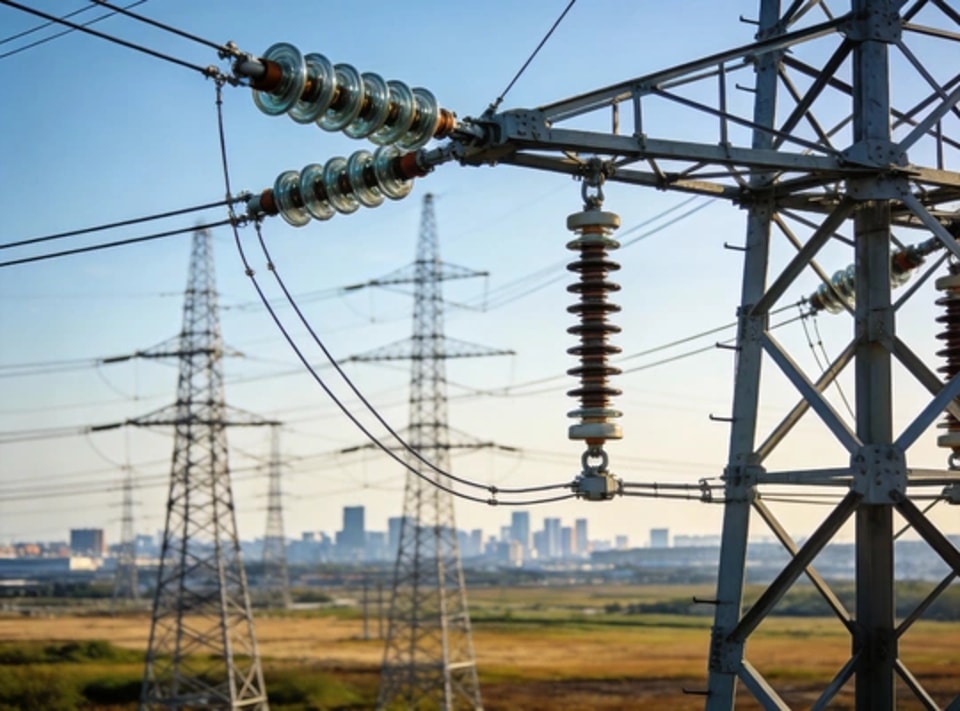
Grid Modernization: How Smart Grids and Virtual Power Plants Are Reshaping Electricity
The electricity grid is transforming from a one-way, centralized delivery network into a dynamic, bidirectional, digitally-managed ecosystem. Smart grid technologies and virtual power plants (VPPs) are enabling this transformation while maintaining reliability and reducing costs.Smart Grid TechnologiesAdvanced Metering Infrastructure (AMI): 1.2 billion smart meters installed globally, providing 15-minute interval consumption data and enabling demand response programsDistribution Automation: Self-healing grids with automated fault detection, isolation, and restoration (FDIR) reducing outage duration by 60-80%Grid-Edge Intelligence: Smart inverters, DERMS (Distributed Energy Resource Management Systems), and edge computing enabling real-time optimization of millions of distributed assetsVirtual Power PlantsAggregation: Combining thousands of distributed solar, storage, EV, and flexible load assets into a single dispatchable resourceMarket participation: VPPs now bidding into wholesale energy, capacity, and ancillary service markets alongside conventional generatorsScale: Global VPP capacity exceeded 90GW in 2025, projected to reach 250GW by 2030Grid Investment OutlookSegment2025 Investment2030 ProjectedGrowthTransmission$180B$300B+67%Distribution$220B$380B+73%Smart Grid IT$45B$95B+111%EV Charging$60B$150B+150%Grid investment is the critical enabler of the energy transition. Without transmission expansion and distribution upgrades, renewable energy deployment will face bottlenecks. Templates035 is expanding our grid infrastructure portfolio to address this growing market opportunity.
Our Address



Product Gallery